
Decking In Helston
Decking Experts
iGroundworks for new builds & extensions in Cornwall. Foundations, drainage, site prep. On 11-house packages
12 Years' Experience
Full Plant Fleet
100% Word of Mouth
RW Groundworks
Groundworks for New Builds and Extensions in Cornwall
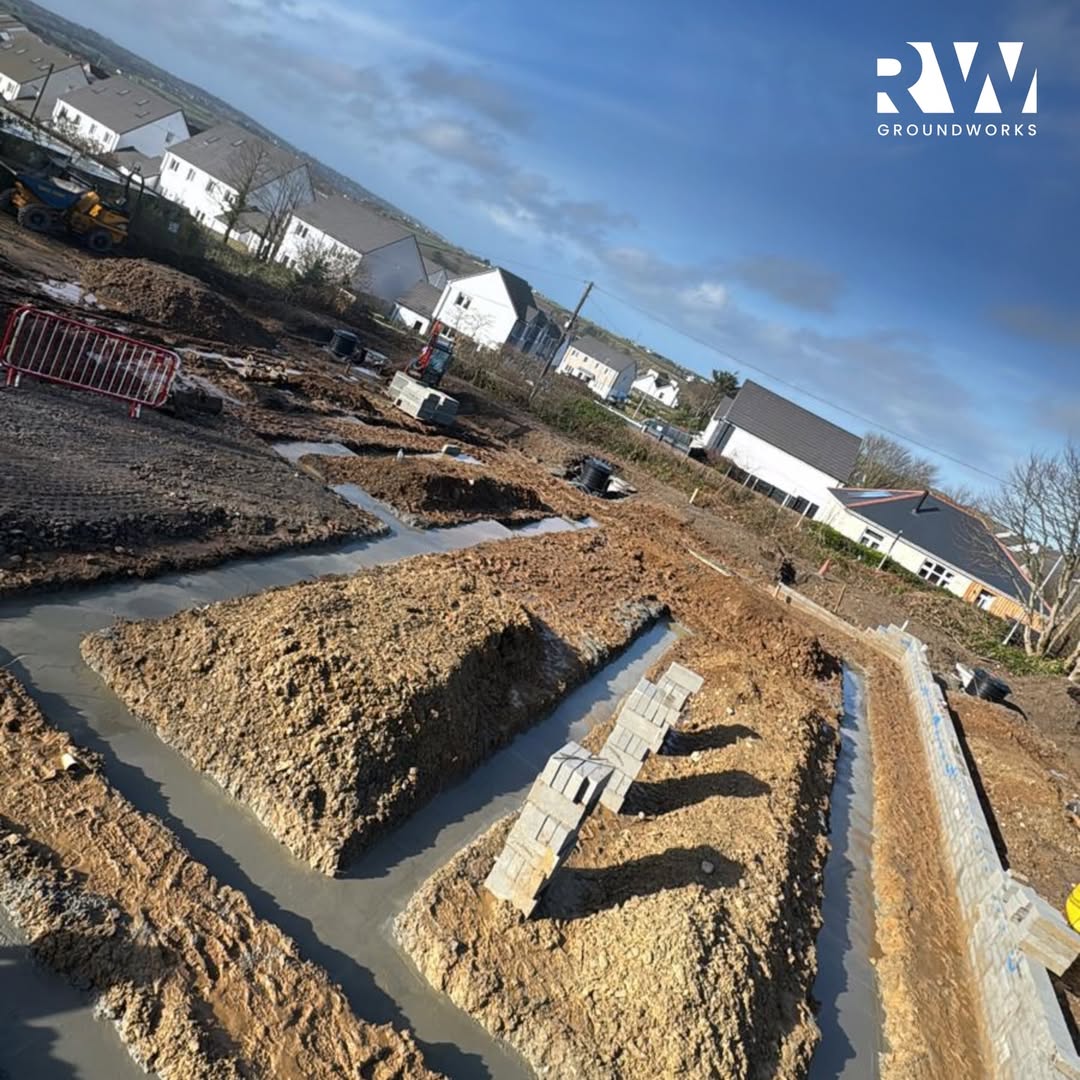
Every new build starts in the ground. Before the walls go up, before the roof goes on — someone has to dig the foundations, lay the drainage, and prepare the site so the rest of the build can happen on time and on spec. That is what RW Groundworks does, and we do it at scale.
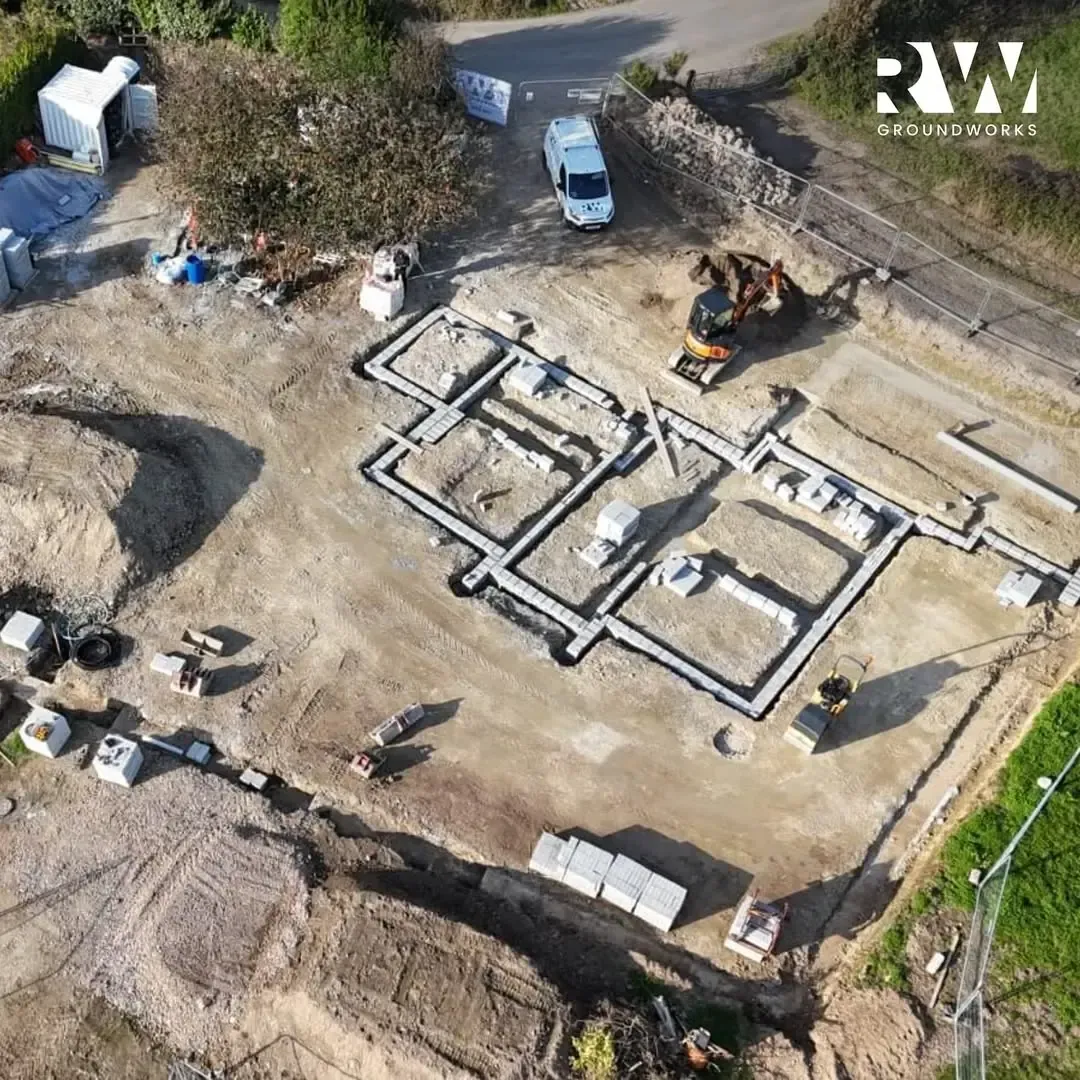
Right now, Reuben Williams and the team are running groundworks packages on 11 houses for 2 clients. That is not a one-off garden job — that is coordinated site work across multiple plots, managing excavation programmes, concrete pours, drainage runs, and service connections in sequence. It is the kind of work that proves capability.
RW Groundworks
What New Build Groundworks Includes
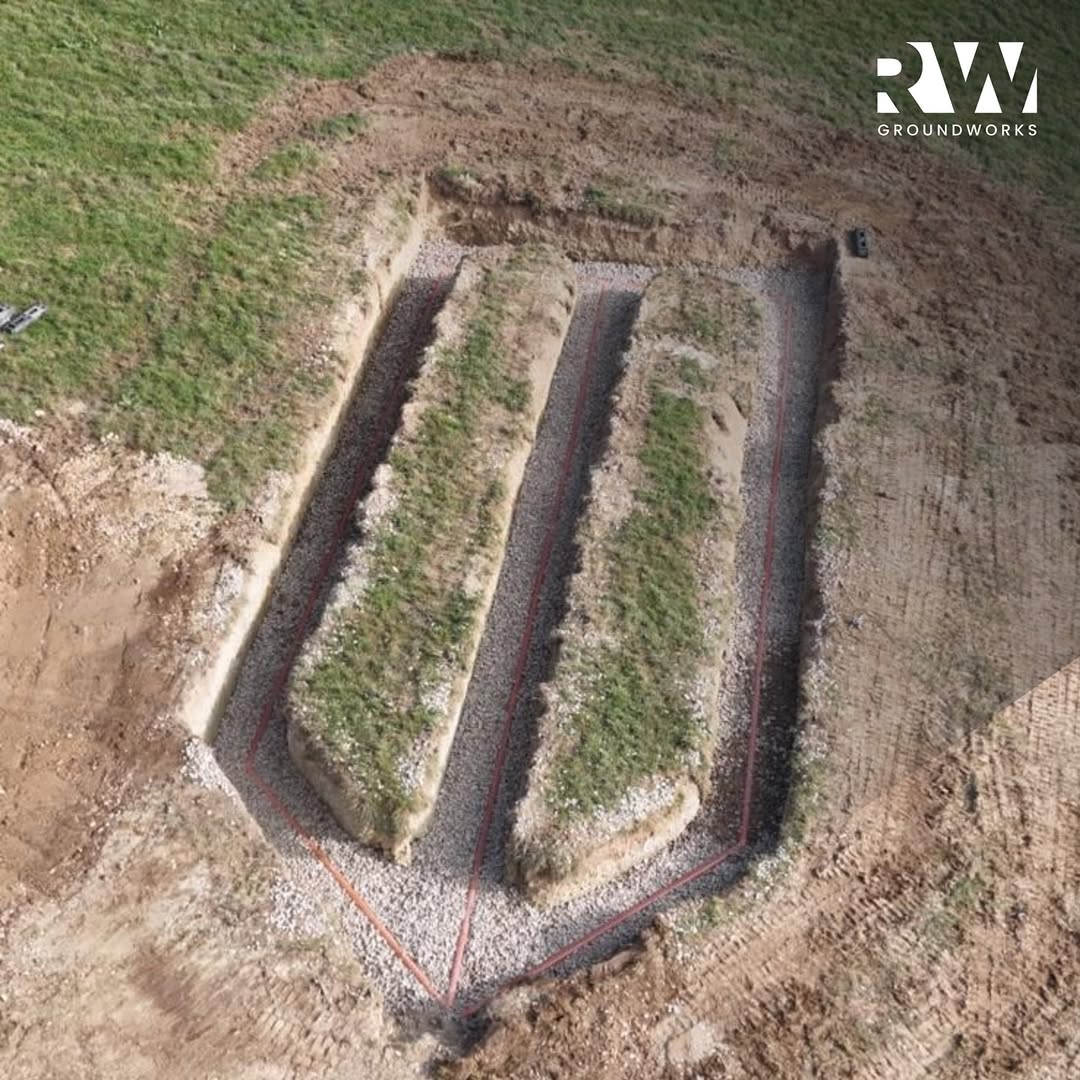
A full groundworks package for a new build covers everything below finished floor level and everything outside the building footprint. On a typical house build in Cornwall, that means:
Foundations:
• Strip foundations — the standard for most single and two-storey houses
• Trench fill foundations — faster than strip, better for deep or unstable ground
• Raft foundations — for sites with poor bearing capacity or mining-affected land (common in parts of Cornwall)
• Piled foundations — where ground conditions require it
Drainage:
• Foul drainage — connections to mains sewer or private treatment plant
• Storm water drainage — soakaways, attenuation tanks, or connections to watercourses
• Below-slab drainage — perimeter drains, land drains, and damp proofing
• Septic tanks and treatment plants — for rural Cornwall properties off mains drainage
Site Works:
• Site clearance and topsoil strip
• Reduced level dig to formation
• Temporary access roads and hardstandings
• Service trenches (electric, gas, water, telecoms)
• Backfill and compaction around foundations
RW Groundworks
Groundworks for Extensions
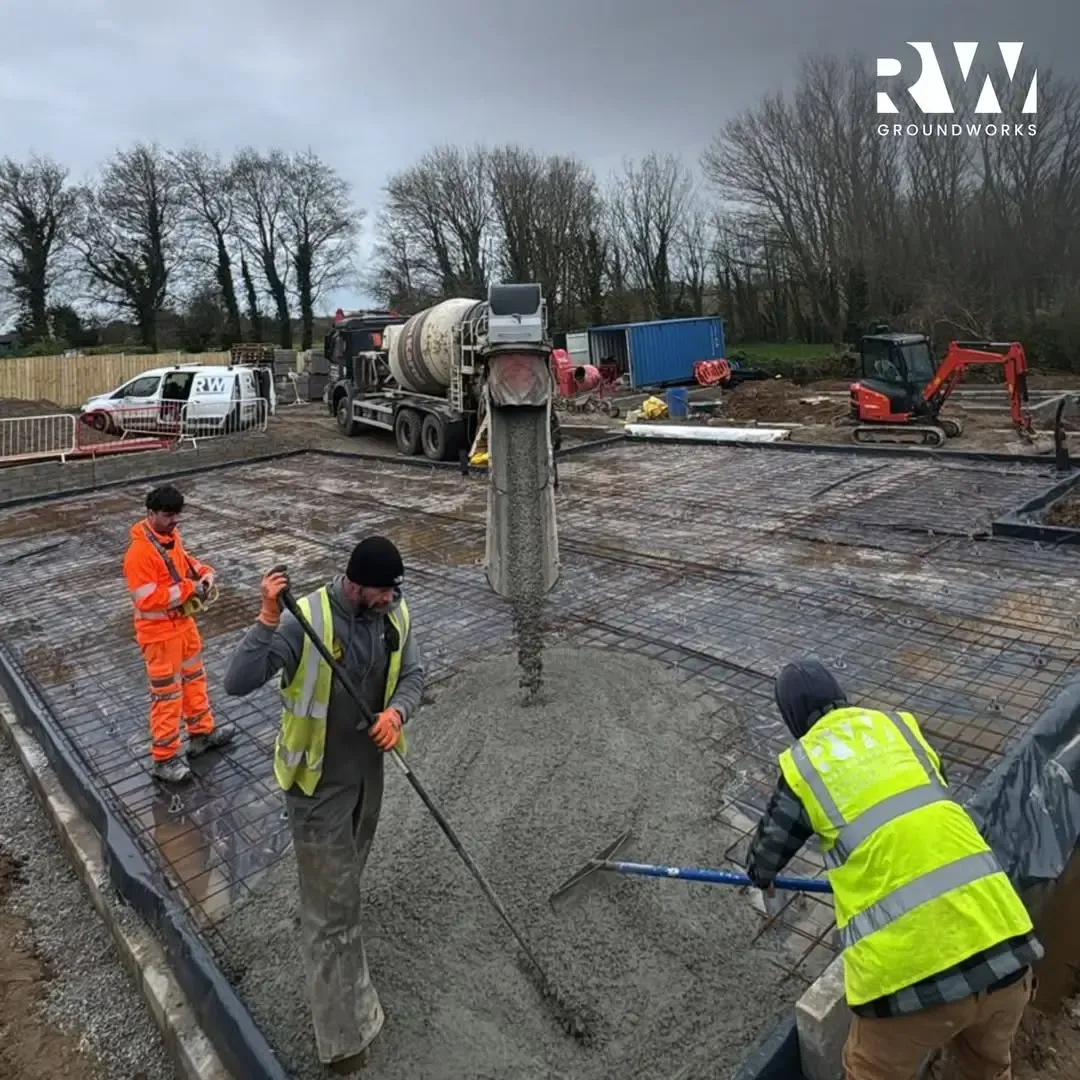
Extensions share the same groundworks principles as new builds but come with their own challenges — working around an existing property, matching into existing drainage, and making sure the new foundations do not undermine what is already there.
Extension foundations in Cornwall need careful consideration because:
Ground conditions vary across a single plot — the extension footprint might sit on different soil to the original house
Existing drainage must be protected — we locate and work around live drains, re-routing where necessary
Party wall considerations — if building near a boundary, the foundations may need to be designed to avoid affecting the neighbour's property
Access is often tight — our 3.3T Hitachi excavator fits through standard garden gates and side accesses
We handle the full extension groundworks scope: excavation, foundations, drainage modifications, floor slab, and backfill. The bricklayer arrives to a prepared site with everything below ground already signed off.
Why Choose Us
Why Hire a Groundworks Specialist
On smaller projects, builders sometimes dig their own foundations with a hired mini digger. On a single garage or simple rear extension, that can work fine. But on anything with depth, complexity, or drainage involvement, a dedicated groundworks contractor saves time and money.

Our own plant — 14T Doosan for bulk excavation, 3.3T Hitachi for tight access, 7T dumper for muck-away, rollers for compaction. No hire costs passed on to you.
Qualified operators — CSCS-carded, SSSTS-qualified. Machine operation is what we do every day, not once a month.
Programme knowledge — we know how long each stage takes, what needs to cure before the next step, and how to keep the build on track.
Drainage expertise — we install deep drainage, treatment plants, and connections to mains. Not just a trench and a pipe.
TESTIMONIALS
What Our Decking Customers Say About Us
The Process
3 Step Process For Your Decking Needs

Contact Us
Start by completing the 'Get a Free Quote' form on our website to share your Decking needs with us.

Schedule Your Estimate
Next, we'll arrange a property visit at a time that works for you to provide an in-person estimate for your Decking needs.

Get The Job Done
After you approve our estimate, we'll schedule a date to complete the job. Our team will work hard to exceed your expectations!
F.A.Q
Decking Frequently Asked
Questions
Here are answers to common questions about our Decking services.
How much do extension foundations cost?
Extension foundation costs depend on the type (strip, trench fill, or piled), depth, ground conditions, and access. As a guide, strip foundations for a single-storey rear extension typically cost £1,500-£4,000 for excavation and concrete. Trench fill is faster but uses more concrete, so costs are similar. Deep foundations on poor ground or near trees can be significantly more. We quote after reviewing the structural engineer's details and visiting the site.
Do I need planning permission for an extension?
Many single-storey rear extensions fall under permitted development rights and do not need planning permission — provided they meet size, height, and boundary distance rules. Two-storey extensions, side extensions, and anything in a conservation area or AONB almost always need planning approval. Your architect will confirm what applies. RW Groundworks does not handle planning applications, but we can start as soon as you have approval.
How deep do foundations need to be for a single-storey extension?
Building regulations require a minimum foundation depth of 1 metre in most cases, but the actual depth depends on ground conditions. Clay soils need deeper foundations (sometimes 1.5m+) to get below the zone affected by seasonal moisture changes. Near trees, depths can increase to 2m or more. In Cornwall, rocky ground sometimes allows shallower foundations if the engineer confirms adequate bearing. The structural engineer specifies the depth — we dig to it.
What is a party wall agreement and do I need one?
If your extension foundations are within 3 metres of a neighbouring property (or 6 metres if you are digging deeper than their foundations), you need a party wall agreement under the Party Wall Act 1996. This involves serving notice on your neighbour and, if they do not consent in writing, appointing a party wall surveyor. This is a legal requirement — starting work without it can result in an injunction. Your architect or a party wall surveyor handles this before we start on site.
What is the difference between strip foundations and trench fill?
Strip foundations use less concrete — you pour a concrete strip (typically 225mm deep) at the bottom of the trench, then build block walls up to ground level. Trench fill uses more concrete — you fill the trench almost to the top with concrete, which is faster because you skip the below-ground blockwork. Trench fill is common in Cornwall where deep foundations are needed because it reduces the time operatives spend working in deep trenches. The structural engineer decides which type suits the site.
RW Groundworks and Civil Engineering Limited


Request A Free Decking Quote
Get Free Quote


CONTACT INFORMATION
SERVICES
SERVICE AREAS
OPERATING HOURS
Office Hours:
Mon to Sun
9:00am - 5:00pm
Cleaning Hours:
24/7
Privacy Policy | Term & Condition | FAQ
Copyright © 2026 RW Groundworks. All rights reserved.