
Fencing In Helston
Fencing Experts
Fencing contractors in Helston & Cornwall. Closeboard, panel, post & rail, security fencing. Concrete posts available.
12 Years' Experience
Full Plant Fleet
100% Word of Mouth
RW Groundworks
Fencing Contractors in Cornwall

Need fencing contractors near you in Cornwall? RW Groundworks installs and repairs fencing across Helston, Penzance, Falmouth, and the wider county. From garden boundary fencing to site security, Reuben Williams and the team build fences that stay standing — properly concreted posts, the right materials for the location, and installation that accounts for Cornwall's weather.
Fencing in Cornwall takes more punishment than most counties. Atlantic winds, salt air near the coast, waterlogged ground in valley bottoms — all of it matters when choosing the right fence type, post material, and foundation depth. RW Groundworks has been working across Cornwall for 12 years and knows which setups last and which ones end up blown over after the first winter storm.
As a groundworks contractor, we understand what goes into the ground. Every fence post we install goes into a properly dug hole with the correct depth and concrete mix. That's the difference between a fence that lasts 3 years and one that lasts 15.
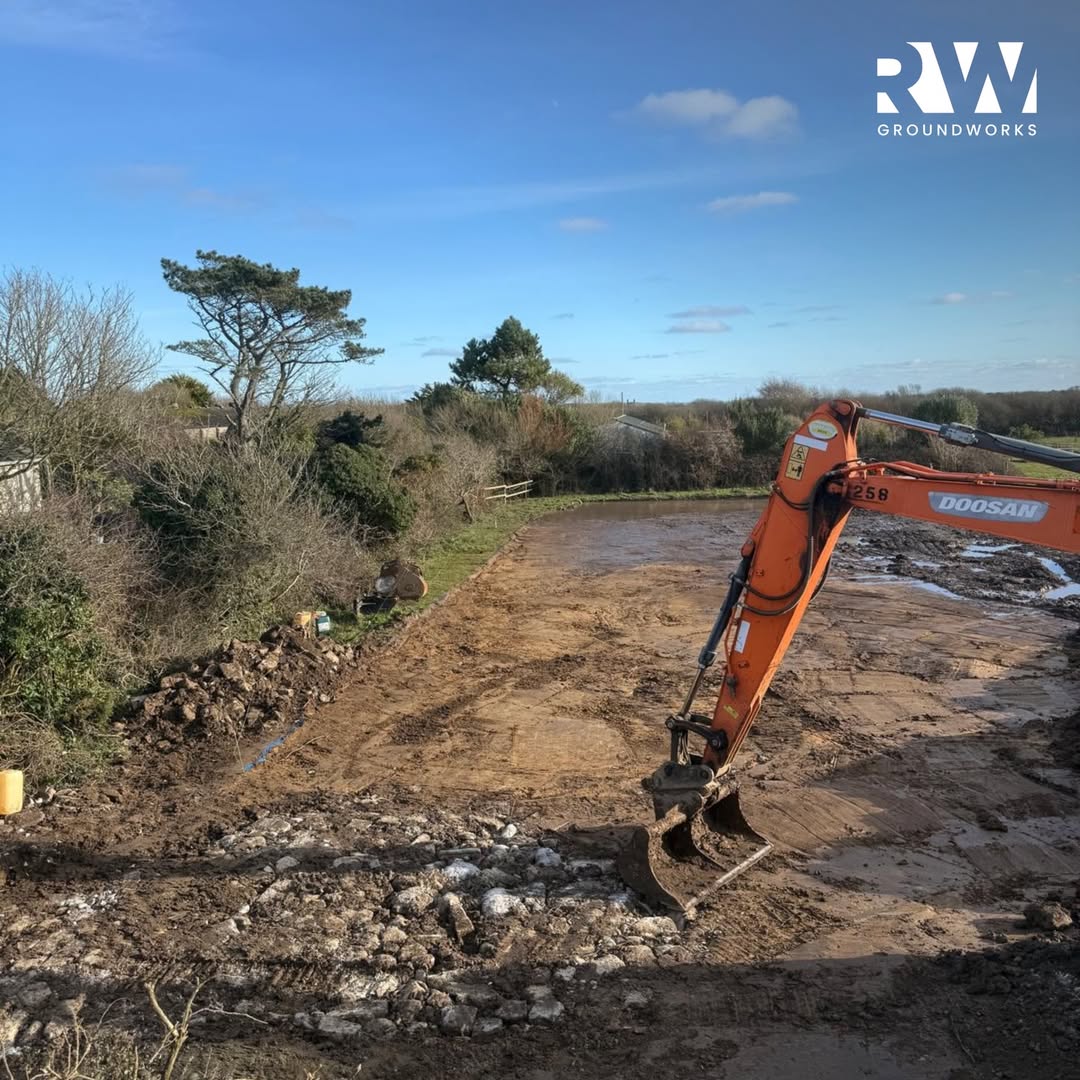
What we do
Fence Types We Install
RW Groundworks handles civil engineering across residential, commercial, and infrastructure projects:

Closeboard (Featheredge) Fencing
The standard for residential boundary fencing. Closeboard fencing uses vertical featheredge boards nailed to horizontal rails, with gravel boards at the base to prevent ground contact and rot. Stronger and more durable than panel fencing, closeboard handles wind better because air can pass between the boards rather than catching the fence like a sail.
RW Groundworks installs closeboard fencing with either timber or concrete posts. Concrete posts and gravel boards add cost upfront but eliminate the most common failure point — rotting posts — giving you a fence that lasts 20+ years with only occasional board replacement.

Panel Fencing
Pre-made fence panels in a range of styles — lap panels, hit-and-miss panels, tongue-and-groove, and contemporary slatted designs. Panels are quicker to install than closeboard and suit gardens where shelter from the wind is the main requirement. RW Groundworks fits panels between concrete or timber posts with gravel boards underneath for longevity.

Post and Rail Fencing
Two or three horizontal rails fixed to upright posts — the classic rural boundary treatment. Suits farms, paddocks, large gardens, and country properties. Available in treated softwood or hardwood. Post and rail fencing defines a boundary without blocking views or light. We also install post and rail with stock wire or mesh for livestock containment.

Security Fencing
Palisade fencing, anti-climb mesh, and chain link for commercial sites, construction compounds, and industrial premises. RW Groundworks regularly fences construction sites and development plots as part of our groundworks operations, so security fencing installation is well within our wheelhouse.

Decorative & Garden Fencing
Trellis panels, picket fencing, and bespoke garden screens. Used as boundaries, windbreaks, climbing plant supports, or to divide garden areas. Can be combined with other fence types — for example, closeboard for privacy with trellis topping for light.
More Services
We work for private clients, developers, main contractors, and local authorities across Cornwall.
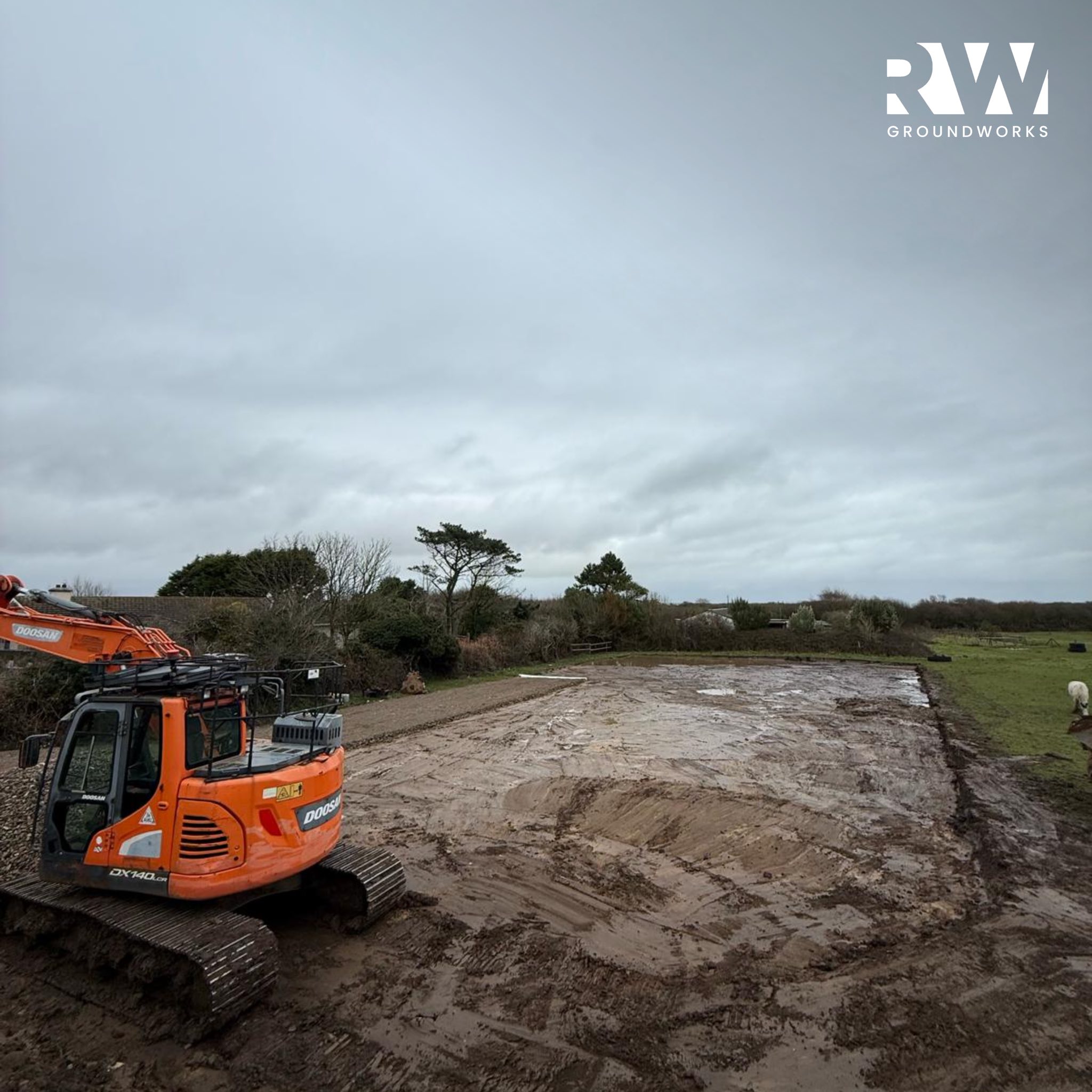
RW Groundworks
Post Options
The posts are the most important part of any fence. RW Groundworks installs:
• Concrete posts — Will not rot, do not need replacing. Combined with concrete gravel boards, the only maintenance is occasional board or panel replacement. The premium option but the lowest lifetime cost.
• Timber posts — Pressure-treated softwood. Lower upfront cost but will eventually rot at ground level, typically after 8 to 15 years depending on ground conditions and exposure. Suitable for areas with good drainage.
• Steel posts — For security fencing and commercial applications. Galvanised or powder-coated for corrosion resistance.
In Cornwall's wet climate, concrete posts are almost always the better investment for permanent boundary fencing.
RW Groundworks
How We Install Fencing

• Site visit and quote — Reuben visits the property, measures the fence line, identifies any obstacles (slopes, trees, services), and discusses your requirements. You receive a clear, itemised written quote.
• Preparation — Old fencing removed if required. Fence line cleared of vegetation, roots, and debris.
• Post installation — Holes dug to the correct depth (typically 600mm for a 6ft fence). Posts set plumb and concreted in with a fast-setting post mix. On sloped ground, posts are stepped to follow the gradient.
• Rails and boards/panels — Horizontal rails fixed, then boards or panels installed. Gravel boards fitted at the base.
• Gates — Gate posts receive additional bracing and deeper foundations to handle the extra weight and movement. Gates hung with heavy-duty hinges and latches.
• Cleanup — Excess concrete, packaging, and old fencing removed from site. Fence line left tidy.

Why Choose Us
Why Choose RW Groundworks

Posts concreted properly. Every post is set to the correct depth in concrete — not rammed into a shallow hole. On a groundworks job, foundation depth matters. We apply the same principle to fencing.
Cornwall-tested. Twelve years of working across Cornwall means we know which fence types hold up to coastal winds, which post materials last in waterlogged ground, and where to add extra bracing.
Full clearance capability. If overgrown vegetation, old fencing, or tree roots need clearing before new fencing can go in, we have the machinery to handle it — excavators, breakers, and tipper trucks for waste removal.
Clean, efficient installation. The team works quickly and tidily. Old fencing and waste removed from site. Your garden isn't left looking like a building site.
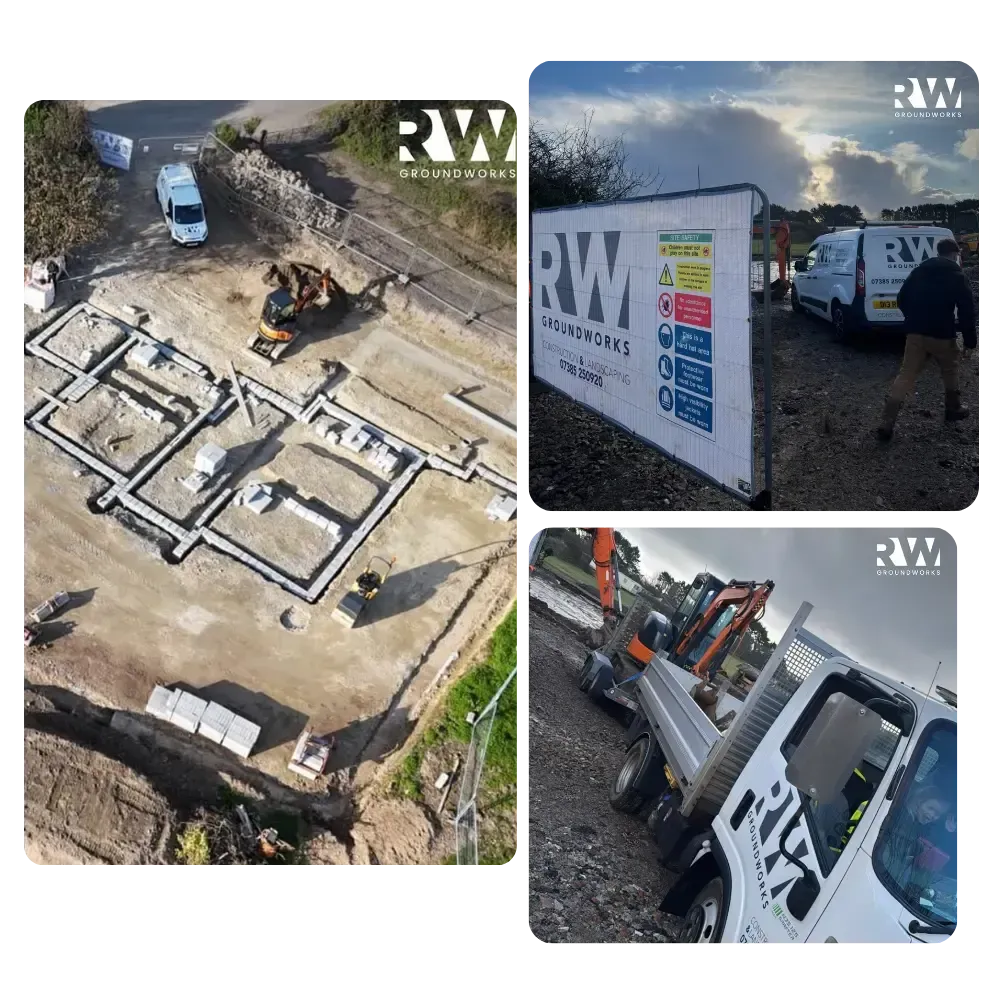
TESTIMONIALS
What Our Fencing Customers Say About Us
The Process
3 Step Process For Your Fencing Needs

Contact Us
Start by completing the 'Get a Free Quote' form on our website to share your Fencing needs with us.

Schedule Your Estimate
Next, we'll arrange a property visit at a time that works for you to provide an in-person estimate for your Fencing needs.

Get The Job Done
After you approve our estimate, we'll schedule a date to complete the job. Our team will work hard to exceed your expectations!
F.A.Q
Fencing Frequently Asked
Questions
Here are answers to common questions about our Fencing services.
How much does fencing cost per metre?
Fencing costs vary by type and specification. Closeboard fencing with concrete posts typically costs £85–£130 per metre installed. Panel fencing with concrete posts runs £65–£100 per metre. Post and rail costs £30–£55 per metre. These prices include post holes, concrete, materials, and installation. RW Groundworks provides a fixed quote based on a site visit.
Do I need planning permission for a fence?
Garden fences up to 2 metres high generally don't need planning permission. Fences adjacent to a highway or footpath are limited to 1 metre without permission. If your property is in a conservation area or is a listed building, additional restrictions may apply. RW Groundworks can advise on the rules for your specific situation.
What is the maximum height for a garden fence?
Without planning permission, a garden fence can be up to 2 metres high (measured from ground level on the higher side). Fences next to a road or public footpath are limited to 1 metre. If you need a taller fence, planning permission is required. Trellis can sometimes be added to the top of a 2m fence as it's not classified as a solid barrier, but check with your local authority.
Who is responsible for a boundary fence?
There's a common belief that you own the fence on the left side of your property, but this isn't a legal rule. Check your title deeds — the "T" marks on the boundary plan show responsibility. If there's no "T" mark, the boundary is shared. In practice, most neighbours agree between themselves. RW Groundworks can install fencing on your side of the boundary to avoid disputes.
How long does fence installation take?
A standard 20-metre garden fence takes 1 to 2 days to install, depending on ground conditions, access, and whether old fencing needs removing. Larger runs, sloped ground, or difficult access may take longer. RW Groundworks aims to complete most residential fencing jobs in a single day where possible.
What types of fencing are best for security?
For residential security, closeboard fencing with concrete posts is the standard — no easy handholds and difficult to break through. For commercial and industrial sites, palisade fencing (steel vertical bars with pointed tops) or anti-climb mesh provides higher-level security. RW Groundworks installs all types and can advise on the right specification for your needs.
Do I need to notify my neighbour before installing a fence?
You don't legally need to notify your neighbour, but it's good practice — especially if the fence is on or near the boundary line. If you're replacing an existing fence that's clearly on your side, notification isn't necessary. If there's any doubt about the boundary position, a surveyor can clarify it before work starts.
How do I find the exact boundary line?
Your property's title deeds and the Land Registry plan show the legal boundary. The "T" marks indicate who is responsible for maintaining the boundary feature. If the exact line is unclear, a chartered surveyor can peg out the boundary. RW Groundworks always installs fencing on the customer's side of the boundary to avoid encroachment issues.
RW Groundworks and Civil Engineering Limited


Request A Free Fencing Quote
Request A Free Groundworks Quote
Get Free Quote


CONTACT INFORMATION
SERVICES
SERVICE AREAS
OPERATING HOURS
Office Hours:
Mon to Sun
9:00am - 5:00pm
Cleaning Hours:
24/7
Privacy Policy | Term & Condition | FAQ
Copyright © 2026 RW Groundworks. All rights reserved.