
Groundworks In Helston
Groundworks Experts
Groundworks contractor in Helston & Cornwall. Foundations, drainage, excavation & site clearance. 12 yrs experience.
12 Years' Experience
Full Plant Fleet
100% Word of Mouth
RW Groundworks
What Is Groundworks?
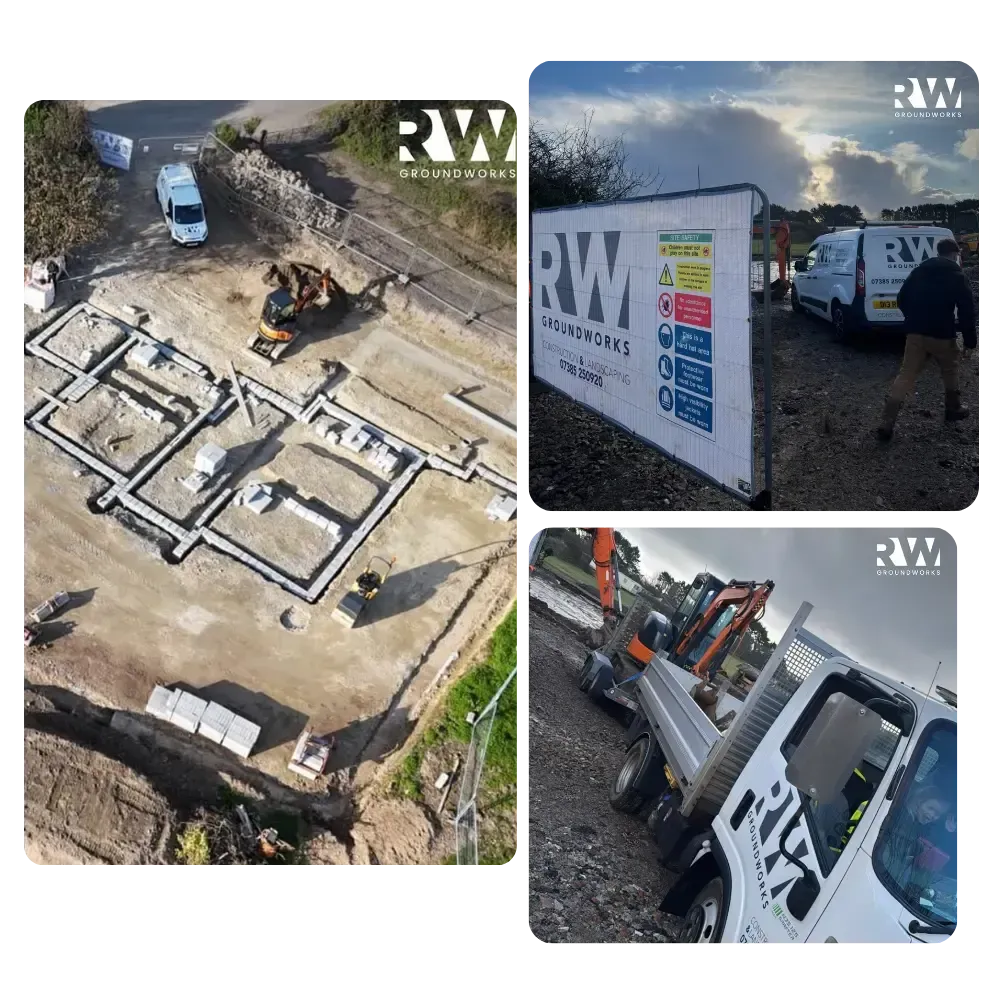
Groundworks cover everything that happens below ground level and at ground level before the main build starts. This includes excavation, foundations, drainage, concrete slabs, and preparing the site so that construction can begin on solid, level, properly drained ground.
Without proper groundworks, buildings settle unevenly, drains fail, and water finds its way where it shouldn't. In Cornwall, where clay soils, granite bedrock, and high water tables are common, getting the groundworks right is not optional — it's the difference between a build that lasts and one that causes problems for decades.
What we do
Our Groundworks Services
From initial concept to final construction, we provide comprehensive architectural
services tailored to your unique needs.

Foundations & Footings
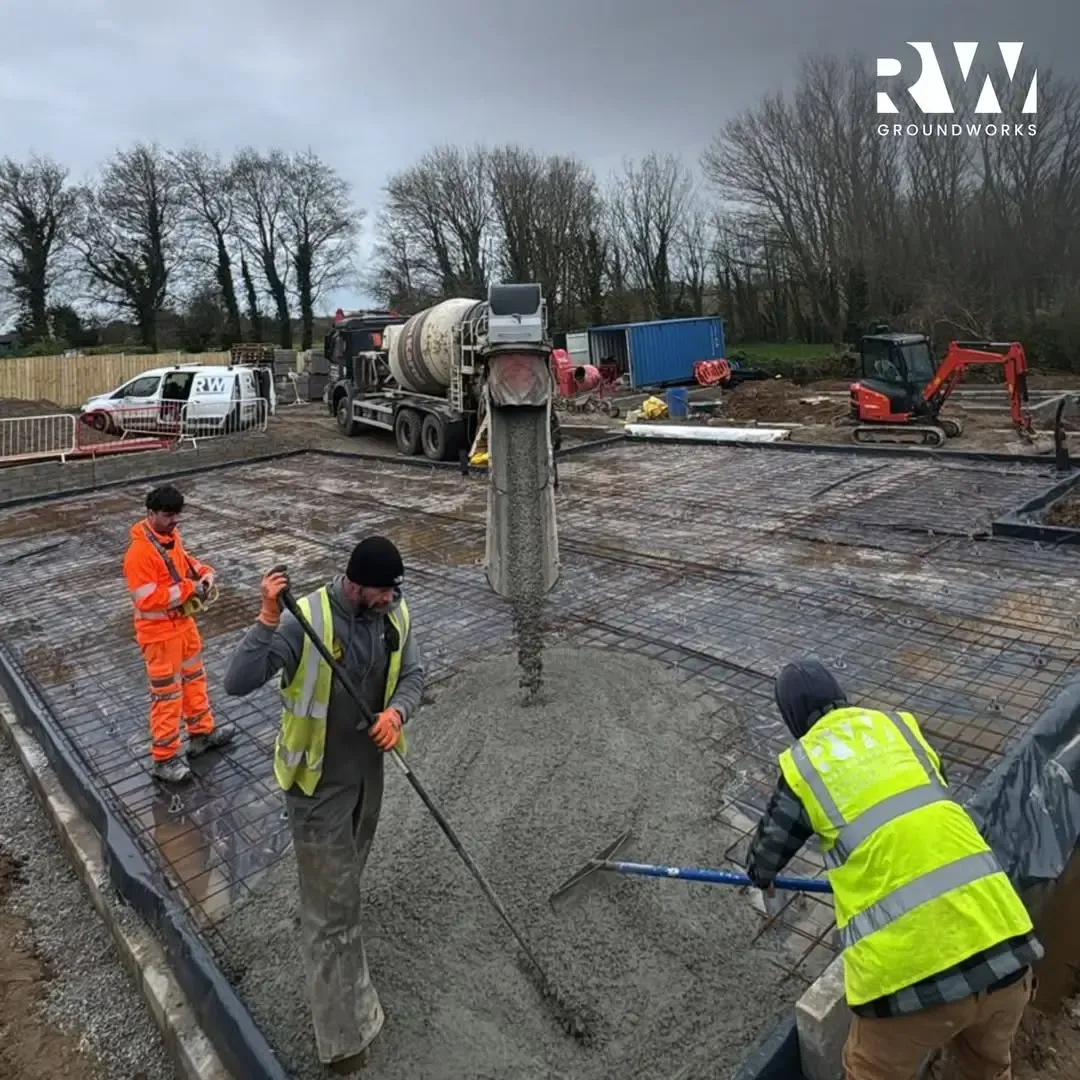
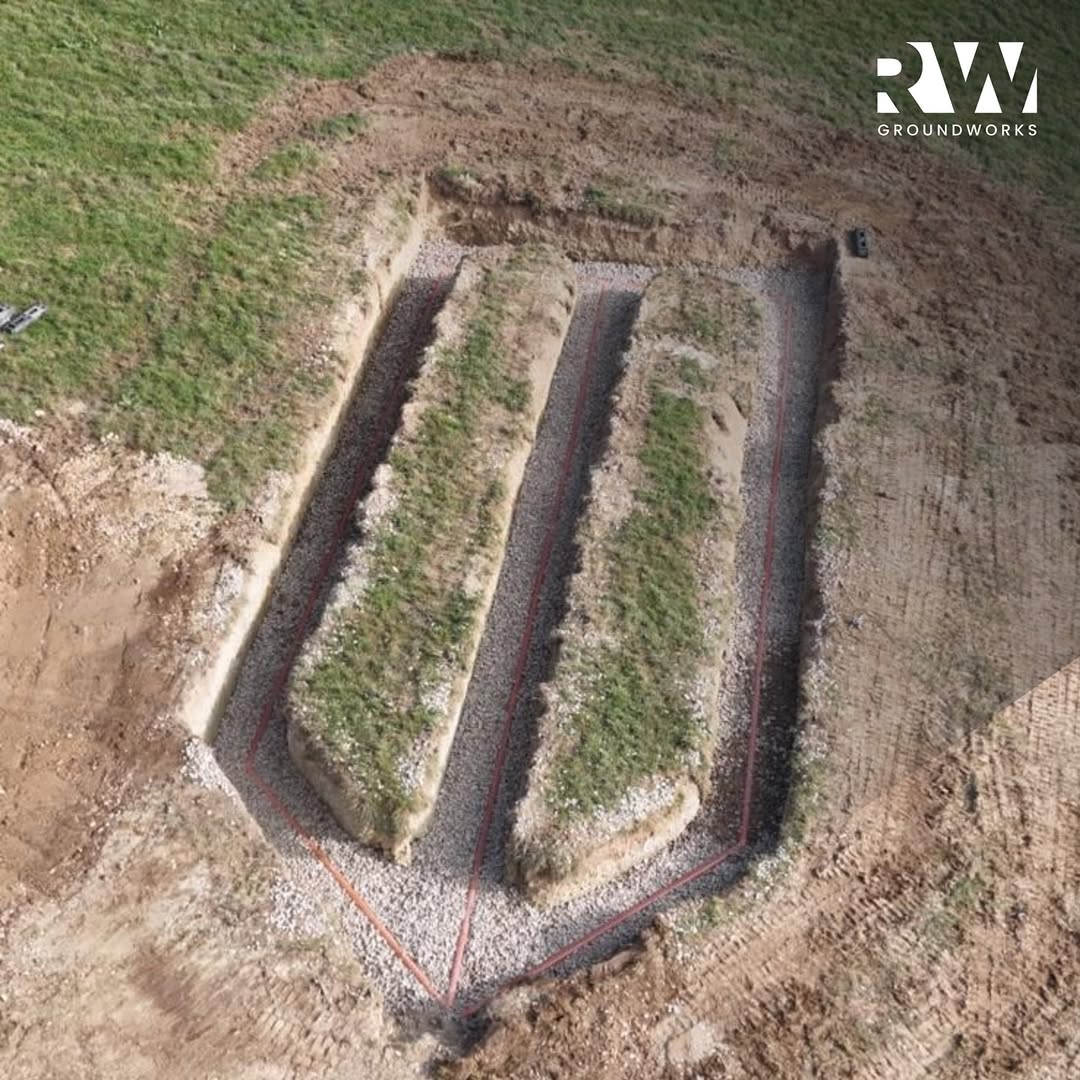
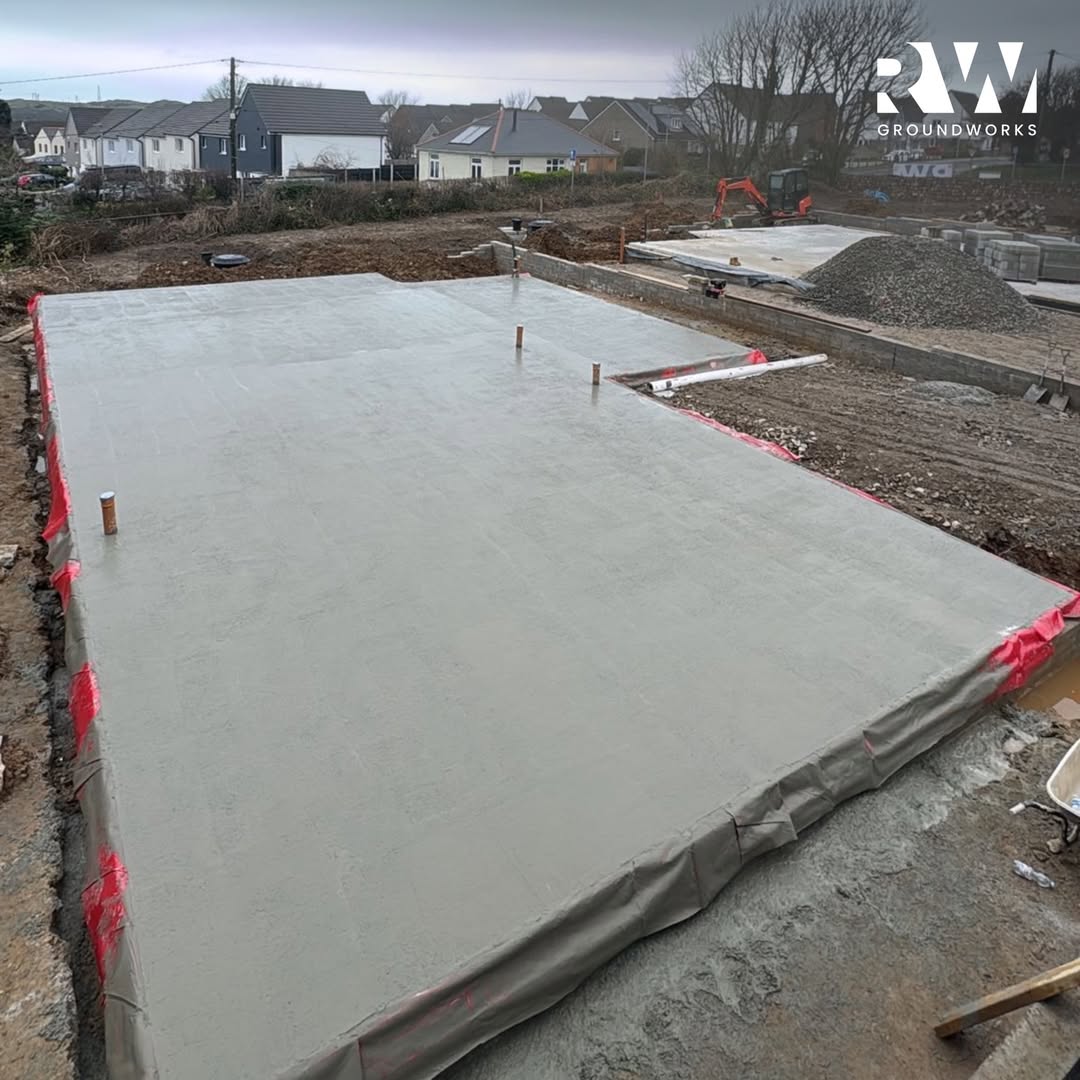
Strip foundations, trench fill, and raft foundations for new builds, extensions, and garden walls. RW Groundworks excavates to the required depth, installs formwork where needed, and pours concrete to Building Control specifications. Every foundation is checked against your structural engineer's drawings before concrete goes in.

Excavation & Earthworks
Site excavation for basements, swimming pools, ponds, and level changes. Bulk earthworks for landscaping, road construction, and development plots. With a 14-tonne excavator and 7-tonne dumper on the fleet, RW Groundworks moves serious volumes of earth efficiently — even on Cornwall's steep and uneven terrain.

Site Clearance
Vegetation clearance, demolition of existing structures, removal of old foundations, and stripping of topsoil ready for construction. RW Groundworks handles site clearance as a standalone service or as the first phase of a larger groundworks package. Two tipper trucks in the fleet mean waste gets shifted off-site quickly.

Drainage Installation
Foul drainage, storm drainage, soakaways, and treatment tanks. RW Groundworks installs drainage systems to current Building Regulations, including connections to mains sewers and installation of septic tanks for rural Cornwall properties that sit off the mains network. Deep drainage runs are handled in-house with no need for subcontractors.

Concreting & Slab Work
Oversite concrete, garage bases, shed bases, and floor slabs. Poured and finished to level by experienced concreters. See our concreting page for more detail on standalone concreting projects.
Retaining Walls & Structural Work
Block work retaining walls, gabion baskets, and reinforced concrete retaining structures for sloped sites. Essential on many Cornwall properties where natural ground levels vary significantly across the plot.
RW Groundworks
What is included Groundworks?
RW Groundworks delivers groundworks across Helston, Penwith, and wider Cornwall. Whether you need foundations dug for a new build, drainage installed on a housing development, or a site cleared before construction starts, Reuben Williams and his team handle it from first dig to final level.
With 12 years in the construction industry and a full fleet of plant — including a 14-tonne Doosan excavator, 3.3-tonne Hitachi, 7-tonne dumper, and multiple rollers — RW Groundworks has the machinery and manpower to take on residential extensions and multi-plot housing developments alike. Every piece of kit is owned, not hired in. That means faster mobilisation and lower costs passed on to you.
Currently running groundworks packages on 11 houses for two clients, RW Groundworks is a groundworks contractors in Cornwall with genuine capacity for large-scale projects and the flexibility to handle smaller domestic jobs.
RW Groundworks
Why Choose RW Groundworks for Groundworks?
Full plant fleet, no delays. Every machine needed for groundworks is owned by RW Groundworks. No waiting for hired-in kit to arrive. A 14T Doosan, 3.3T Hitachi, 7T dumper, Bomag rollers, wacker plates, breakers — it's all on hand when needed.
12 years on the tools. Reuben started as a skilled labourer, progressed to site supervisor running full sites, and now runs his own groundworks operation. That journey means he understands every layer of a build, not just the bit in the ground.
100% word of mouth. Every job RW Groundworks has taken on has come through reputation. No paid advertising, no lead-buying — just consistent results that make people recommend the team to others.
Qualified crew. The RW Groundworks team holds CSCS cards, SSSTS and SMSTS qualifications, and includes highway operatives and certified machine operators. Health and safety isn't a box-ticking exercise — it's built into how the team works.
Start to finish capability. RW Groundworks doesn't just dig holes. The team can take a project from site clearance through foundations, drainage, concrete, and structural work — reducing the number of contractors you need to manage.
RW Groundworks
What is included Groundworks?
Site visit and quote — Reuben visits the site, reviews drawings if available, assesses ground conditions, and provides a detailed written quote.
Planning and scheduling — Work is scheduled around your build programme. Plant and materials are booked in advance so there are no delays on start day.
Site setup — Access routes established, services located and marked, welfare facilities in place if required.
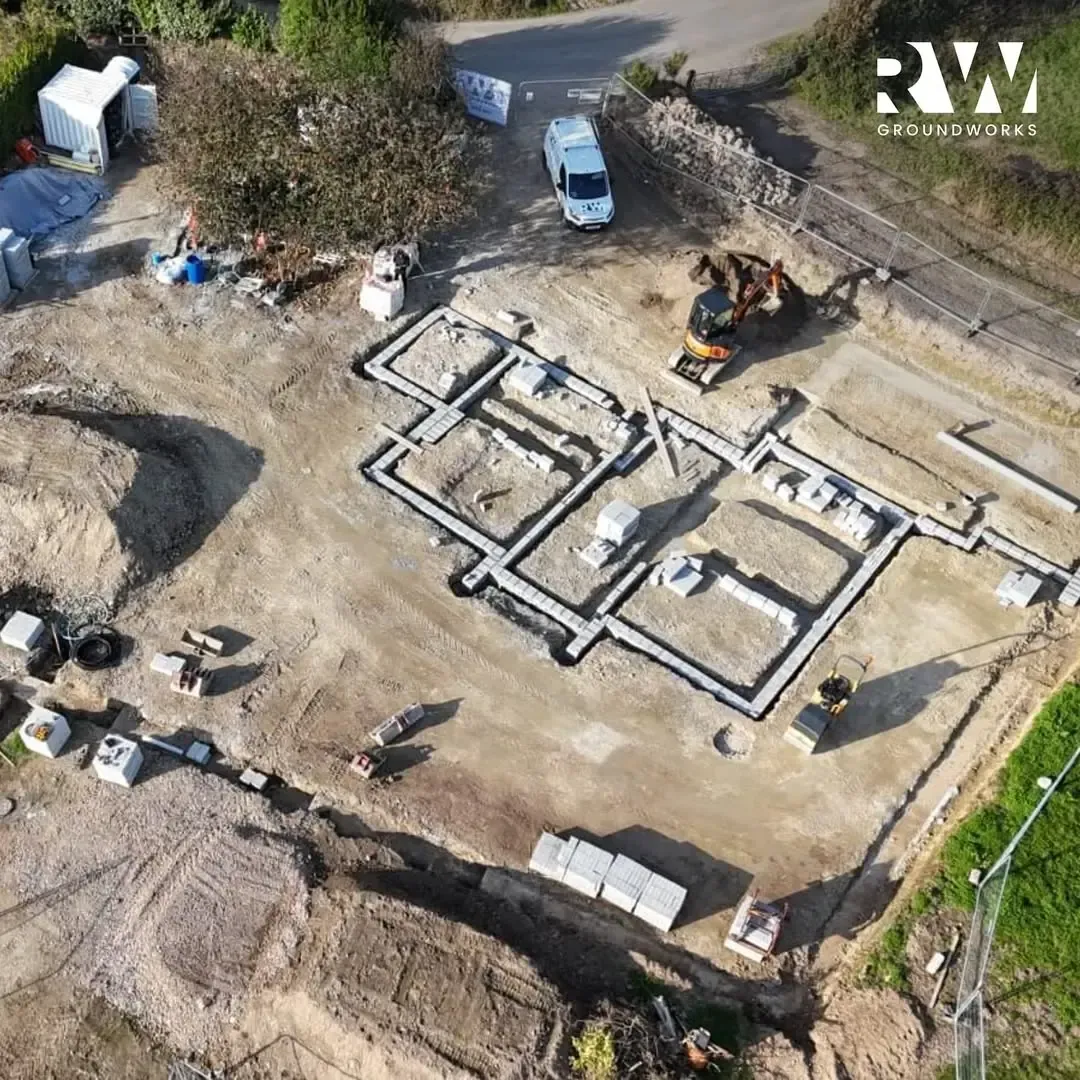
Excavation and groundworks — Foundations dug, drainage laid, concrete poured, ground levelled. Each stage is completed to Building Control standard.
Inspection and sign-off — Work is inspected before backfilling or covering. Building Control inspections are arranged at the appropriate stages.
Handover — Site left clean and ready for the next trade to start. As-built drainage drawings provided where applicable.
CONSTRUCTION & GROUNDWORKS
Services Areas We Cover
RW Groundworks operates across Cornwall from our base in Helston. Eight core service areas, all within easy reach of the A30 corridor.
TESTIMONIALS
What Our Groundworks Customers Say About Us
The Process
3 Step Process For Your Groundworks Needs

Contact Us
Start by completing the 'Get a Free Quote' form on our website to share your Groundworks needs with us.

Schedule Your Estimate
Next, we'll arrange a property visit at a time that works for you to provide an in-person estimate for your Groundworks needs.

Get The Job Done
After you approve our estimate, we'll schedule a date to complete the job. Our team will work hard to exceed your expectations!
F.A.Q
Frequently Asked
Questions
Here are answers to common questions about Groundworks
What are groundworks?
Groundworks include all below-ground and ground-level work needed before a building goes up. This covers excavation, foundations, drainage, concreting, and site preparation. In Cornwall, groundworks also often include dealing with high water tables, clay soils, and rocky ground conditions that affect how foundations and drainage are designed.
How much do groundworks cost per square metre?
Groundworks typically cost between £80 and £150 per square metre for a standard domestic project, depending on ground conditions, foundation type, and drainage requirements. Rocky ground, deep foundations, or complex drainage layouts push costs higher. RW Groundworks provides itemised quotes so you can see exactly where your money goes.
How long do groundworks take?
A domestic extension might take 1 to 2 weeks for foundations and drainage. A new build typically needs 3 to 6 weeks depending on size and complexity. Multi-plot developments take longer but benefit from economies of scale. Reuben will give you a realistic timeline at the quoting stage.
Do I need planning permission for groundworks?
Groundworks themselves don't usually need separate planning permission — they fall under the planning approval for the overall build. However, if you're creating new drainage connections, installing a septic tank, or working near a watercourse, additional consents may be required. RW Groundworks can advise on what's needed for your specific project.
What qualifications should a groundworks contractor have?
Look for CSCS-carded operatives, SSSTS or SMSTS-qualified supervisors, and evidence of public liability insurance. For machine work, operators should hold CPCS or equivalent tickets. The RW Groundworks team holds all of these qualifications, with highway operative certification for road-adjacent work.
What should a groundworks quote include?
A proper groundworks quote should break down excavation, materials (concrete, aggregate, pipework), plant hire, labour, waste disposal, and any subcontractor costs. It should reference the drawings or specification the price is based on. RW Groundworks provides fully itemised quotes with no hidden extras.
What types of foundations are there?
The three main types are strip foundations (the most common for houses), trench fill (where concrete fills the full trench depth — faster but uses more concrete), and raft foundations (a concrete slab that spreads the load, used on poor ground). Your structural engineer specifies which type based on ground conditions and building loads.
What factors affect groundworks costs?
Ground conditions are the biggest variable — rock, clay, waterlogged ground, and contaminated land all increase costs. Other factors include foundation depth, drainage complexity, access for machinery, distance to tip for waste, and whether the site needs a retaining structure. Cornwall's varied geology means costs can differ significantly between sites just a few miles apart.
RW Groundworks and Civil Engineering Limited


Request A Free Groundworks Quote
Get Free Quote


CONTACT INFORMATION
SERVICES
SERVICE AREAS
OPERATING HOURS
Office Hours:
Mon to Sun
9:00am - 5:00pm
Cleaning Hours:
24/7
Privacy Policy | Term & Condition | FAQ
Copyright © 2026 RW Groundworks. All rights reserved.